Showing posts with label retired. Show all posts

Wednesday, August 12, 2020

What happened to PhoneGap? Why was it discontinued?

.

Adobe announced it is ending the development for PhoneGap and PhoneGap Build. PhoneGap was created in 2008 to give mobile app developers a way to easily create web and mobile applications with a single codebase. 


Since 2008, the industry and market has evolved and PhoneGap usage has declined. 


“In the context of these developments and declining PhoneGap usage, Adobe is focusing on providing a platform that enables developers to build, extend, customize and integrate with Adobe products,” the company wrote in a post. 


PhoneGap Build will be discontinued on October 1. In addition, Adobe will be ending its investment in Apache Cordova. 


According to the company, Apache Cordova will continue to exist, and users can also transition to Ionic, or alternative products such as Monaca, Framework7, NativeScript or Progressive Web apps. Additionally, PhoneGap will continue to be free and open source, but it won’t be actively worked on. Eventually, Adobe explained that PhoneGap tooling will become incompatible with the latest version of Apache Cordova. 


“As the pioneer of hybrid app development, aka web developers building mobile apps, this is truly the end of an era,” Max Lynch, co-founder and CEO of Ionic, wrote in a post. “But one thing that hasn’t changed: web developers want to build web apps and run them everywhere. They want to use their existing skills, browser-based development process, web libraries, and code to build mobile apps.”

https://sdtimes.com/adobe/adobe-to-discontinue-phonegap-development/


Read More

Monday, August 10, 2020

What happened to Nokia? Why was it discontinued?

.

Way back before phones had apps, touchscreens, or cameras, one Finnish brand led the mobile phone revolution.

Renowned for its indestructible build and multiday battery, Nokia swiftly captured market share by promoting mobile phones as fashion accessories. Just like with watch straps, users could swap cover colors, turning a cellphone into a fashion statement.

By 1998, Nokia overtook Motorola to become the world’s largest mobile phone brand.

At its pinnacle in 2007, Nokia had 51% of global market share in mobile phones. To put that into context, Apple now has roughly 25% of global market share.

From the highs of global dominance to the lows of nearing bankruptcy, Nokia’s phone business culminated in a sale to Microsoft for $7.2 billion in 2013.

“We didn’t do anything wrong, but somehow, we lost” — Stephen Elop, former Nokia CEO

Nokia’s Mistakes

The brand’s downfall stems from numerous factors — both controllable and uncontrollable. Either way, they certainly messed something up.

Here are four key mistakes that lead to the company’s decline:

1. Only Focusing on Hardware

Building a physical device such as a mobile phone is undoubtedly a feat. However, without good software in it, it wasn’t going to stick.

By the time they realized it, Android and Apple already had the first-mover advantage into the app-based software (iOS and Android) that is now widespread in the phone industry.

Nokia’s operating system was called Symbian. While iOS and Android were app-based, Symbian was device-based. Basically, they were headed in the wrong direction. By 2009, Nokia was using 57 different and incompatible versions of its operating system — a complete nightmare for the company.

It must be for a reason there’s a huge buzz about software engineers, yet you hardly hear about “hardware engineers.”

2. Reluctance to Change Operating Systems

Image of Microsoft CEO Steve Ballmer and Nokia CEO Stephen Elop

Microsoft CEO Steve Ballmer and Nokia CEO Stephen Elop. Image by BI.

As Google entered the market in 2008, many competitors jumped ship to the Android operating system. Among them were soon-to-be bestsellers Samsung, Motorola, and Huawei. While competitors enjoyed an increasing share of the market, Nokia was reluctant to switch operating systems.

In 2011, Nokia finally took the leap. Except they didn’t change for Android. They partnered with Microsoft to implement Windows Phone as Nokia’s primary operating system.

This move proved to be catastrophic for the company, with Nokia effectively surrendering its market-leading position in 2013. To put this mistake into context, Android now dominates the OS market with over 80% of the smartphone operating systems, while Windows Phone is now discontinued.

Finally, in 2014, Nokia came to its senses and made the switch to Android, but it was all too late.

3. Dysfunctional Organization

Image of an Engineering Matrix Structure

Engineering Matrix Structure. Chart by PMI

While Nokia operated using a standard hierarchical organization through to the early 2000s, company executives decided to reorganize into a matrix structure in 2004, with the hopes of increasing innovation.

With the reorganization, conflicts began to arise. Among the disadvantages of having a matrix structure is that several managers have equal authority, which inevitably leads to power struggles. Inevitably, this also led to the departures of key members of the executive team.

While Nokia was dwelling with internal conflict, Apple — its biggest threat — was managed by a laser-sharp Steve Jobs, and was swiftly gaining market share through meticulous design, branding, and execution.

4. Missing the Smartphone Wave

Image of the first iPhone in 2007

The first iPhone back in 2007. Note the 4–16GB storage options; how times have changed. Image by iPhoneLife

In the mid-2000s, when smartphones began to emerge, Nokia sat comfortably on the cellphone throne. They were established, popular, and profitable.

Blinded by their success, they missed out on the first-mover advantage for smartphones. Given their resources, Nokia could have gained a serious lead over competitors in this area. Instead, they focused on producing durable, affordable, and traditional cellphones; the exact opposite of what most consumers were looking for.

Catapulted by the sleek iPhone, smartphones swiftly took over, kicking Nokia out of the mobile phone podium.

Read More

Wednesday, January 01, 2020

What happened to Floppy Diskette? Why was it discontinued?

.

A floppy disk is a disk storage medium composed of a disk of thin and flexible magnetic storage medium encased in a rectangular plastic carrier. It is read and written using a floppy disk drive (FDD). Floppy disks were an almost universal data format from the 1970s into the 1990s, used for primary data storage as well as for backup and data transfers between computers.

.

Floppy disks remained a popular medium for nearly 40 years, but their use was declining by the mid- to late 1990s. The introduction of high speed computer networking and formats based on the new NAND flash technique (like USB flash drives and memory cards) led to the eventual disappearance of the floppy disk as a standard feature of microcomputers, with a notable point in this conversion being the introduction of the floppy-less iMac in 1998. After 2000, floppy disks were increasingly rare and used primarily with older hardware and especially with legacy industrial computer equipment.

.

https://en.wikipedia.org/wiki/History_of_the_floppy_disk


Read More

Wednesday, April 18, 2018

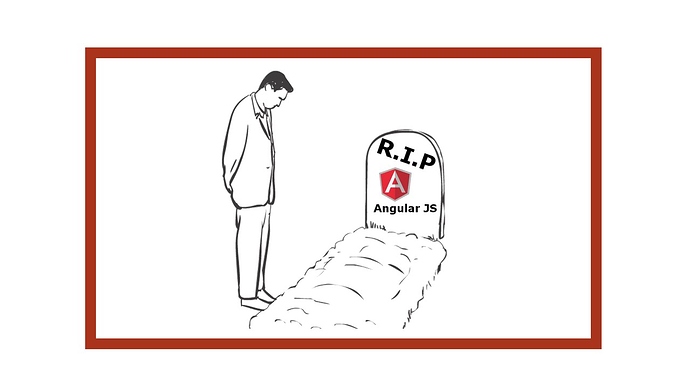
What happened to AngularJS? Why was it discontinued?


 .

AngularJS End of Life Announced

.

The AngularJS End of Life timeline has been announced. Are you ready?


When AngularJS was first introduced in 2009, it was revolutionary. Originally developed to support a SaaS application, the project was eventually released to the masses as an open source library for building web applications. That original freemium service is archived here for posterity. The library’s extensive focus on testability and performance, along with the rapid evolution taking place in the larger JavaScript ecosystem enticed Google enough to acquire it and by extension the architects AngularJS: Miško Hevery and Adam Abrons.


While AngularJS did many things right, there was a push to rewrite the project to leverage TypeScript and transform it into a true platform for web application development. Unfortunately, it would not be possible to implement without introducing significant breaking changes. So the project was effectively forked. Angular was born while AngularJS continued to enjoy support from the team at Google and the larger community.


But its days were numbered.


The first announcement came in January 2018, later reiterated at NG Conf in Salt Lake City, that the final release of AngularJS would be 1.7 and would enter Long Term Support (LTS) through June 30, 2021. After that time, Google will no longer maintain the library.


If you are currently built on AngularJS, now is the time to start considering your strategy for migrating.


The smoothest transition path is to move your application to Angular, the newest generation of the project. Angular is a robust platform for application development, and your existing development team should have no issues picking up the differences. But this is a decision that project leaders need to begin considering today.


React is another fantastic option for web applications, but could potentially result in less code reuse. For pure AngularJS apps, we generally recommend a migration to Angular.


We recently completed delivery of a custom built Angular system to an $18B consumer goods giant, supporting many of their internal line of business applications. If you have questions about your migration options or think you might benefit from an experienced Angular Architect on the project, please get in touch to discuss.


The clock is ticking towards the official AngularJS End of Life. Don’t get caught on your heels!

.

https://www.convective.com/angularjs-end-of-life/

Read More

Thursday, November 16, 2017

What happened to Intel XDK? Why was it discontinued?


.

PaulF_IntelCorp

Employee

‎11-16-2017 02:41 PM

[RETIRED] Intel XDK

Development and support for the Intel XDK has ceased.

The Intel® XDK is no longer being developed or updated for new operating systems and devices. You may continue to use the final version of Intel XDK (version 3987).

https://community.intel.com/t5/Software-Archive/RETIRED-Intel-XDK/td-p/1075483

.

PaulF_IntelCorp

Employee

‎10-26-2016 12:26 PM

An "IoT Companion App" is a mobile Cordova app that's been optimized for use with IoT devices and IoT cloud services. What that means, regarding mobile apps, is that our system will focus on creating Cordova mobile apps that use Cordova plugins that are useful for communicating with apps running on IoT devices and for communicating with cloud services that designed for use with IoT devices.

Mobile apps that you create with the XDK are standard Cordova mobile apps. As the IoT focus of the XDK progresses, if you need to leave the XDK we will provide you with the means to move your mobile app to Cordova CLI. The XDK creates a standard Cordova CLI application, so any app you create with the XDK can be easily built and developed using standard Cordova CLI tools.

Regarding Intel support personnel, none of us works full time on providing support. It has always been this way, we all have other duties we must attend to, beyond support. We are in the process of adding some new support personnel to the forum. Additionally, there are quite a few regular developers who answer questions on this forum. We do try to restrict our support to issues that are specific to the use of the XDK; we are not here to teach people how to write a mobile app or an IoT app. For general help regarding programming problems there are many blogs and forums that provide much better information.

https://community.intel.com/t5/Software-Archive/Future-direction-of-the-XDK/m-p/1066498

.

Read More

Monday, September 18, 2017

What happened to SharpDevelop? Why was it discontinued?

 .

According to dgrunwald , a member of ICSharpCode github icsharpcode/SharpDevelop community:

Yes, it's dead.

It takes a massive amount of effort just to keep up with the changes to the language and build system Microsoft is doing, probably at least 2 man-years to catch up to C# 7 / the .NET Core stuff. That's a bit too much for a hobby project -- we don't have that kind of free time anymore, and even if we did, there are better ways to spend it than playing catch-up with a huge dev team at Microsoft.

Combine that with the free community edition, and there's little space for multiple open-source C# IDEs.

Remember that MonoDevelop is still around; and that VS Code is also open-source! Start with one of those if you need a portable IDE.

https://github.com/icsharpcode/SharpDevelop/issues/799

.
Alternative:
(Cross platform IDE for C#, F# and more)
Read More

Thursday, October 13, 2011

What happened to MS FoxPro? Why was it discontinued?

.

“Not a Strategic Product”

Enough disclaimers, let’s get to the subject at hand.  Microsoft has stated for some time that FoxPro was not a strategic product for them.  What does that mean?  To my mind, a strategic product is one that Microsoft would invest in heavily and recommend as the primary path for their customers.  MS would build upon the technology and form an entire “strategy” around it.  VB was strategic.  COM was strategic. .NET is strategic.  Fox was not.  Why not?  To answer that, I think you have to look at why Microsoft bought Fox Software in the first place.

Why Buy Fox?

So, why did Microsoft buy Fox Software.  I will quote an article Jordan Powell wrote in FoxTalk when Access 1.0 and FoxPro 2.5 were about to ship:

Microsoft was working on its Access DBMS which uses a modern variant of the BASIC language. It had to have been embarrassing for Microsoft to have such a glaring hole in its product lineup. They had no DBMS, and their partnership with Ashton-Tate failed to get Microsoft SQL Server off the ground. Some of the marketing types at MS realized that FoxPro was the best version of X-Base out there, and had been trying to talk Bill Gates into doing something about it. They knew that the X-Base language commanded a huge segment of the market and that a product which used the X-Base language would get them into the DBMS market in a big way. They had the marketing resources to put behind FoxPro, and Fox had some interesting and useful technology — not to mention some very talented people, the kind Microsoft likes.

.

xBase Market Decline


FoxPro was first and foremost a competitor in the xBase market.  As that market declined, so did the value of FoxPro as a strategic product to Microsoft.  What led to the decline of a technology that had been so popular in the 80’s and early 90’s?  Technology trends are constantly changing, but here are few key things that in my opinion diminished the xBase market:


dBASE IV: 

dBASE IV was a buggy disaster, and it was two years before they released version 1.1.  Borland bought Ashton-Tate, but could not undo the damage.  dBASE for Windows was not released until 1994.  This was good for FoxPro, which became the biggest fish in the xBase pond, but the pond itself began to shrink.


Lawsuit: 

Ashton-Tate sued Fox Software for cloning dBASE.  The suit was dropped when Borland bought Ashton-Tate, but it could not have inspired confidence in the xBase market.


Client-Server: 

By the early 90’s, client-server technology picked up in popularity and developers were beginning to flock towards database servers and client-server development tools like PowerBuilder and VB.  At the same time, Microsoft was trying to enter the server market with Windows NT and SQL Server, so I’m sure there was strong emphasis on this style of development from them.  I believe there was talk of a “FoxServer” product at Fox Software, but it never saw the light of day before the Microsoft acquisition.


Those are reasons that the xBase market declined, but about now you’re thinking that VFP is so much more than an xBase tool.  I couldn’t agree more.  VFP can go toe-to-toe with VB, PowerBuilder, Delphi, .NET, and others.  If FoxPro was supposed to “go quietly into the night”, someone forgot to tell the VFP 3.0 team, because they transformed the Fox into a full-fledged OOP development platform ready for the 32-bit world and beyond.  So, why wasn’t the emphasis there from Microsoft? 


An important point to make about Microsoft is that they are a follower of development trends, not a leader.  With a few exceptions (the VB GUI designer comes to mind), Microsoft has not been the one to create a development trend.  “Embrace and extend” was their motto, and they have done well with that.  Windows was Microsoft’s answer to the Mac.  .NET is Microsoft chasing Java into the enterprise.  They follow current trends and they do so mercilessly.  Even now, Microsoft is emphasizing HTML5, leaving Silverlight developers thinking “Wait, I thought we were on the cutting edge?”  It would be out of character for Microsoft to promote and strategize around a product built for a market that was trending downwards.  It’s nothing personal against the Fox, it’s just not in their DNA. 


FoxPro Market Decline

Even with the xBase decline, if FoxPro revenue had continued upward, I wouldn’t be writing this article.  Sales declined, and there are several reasons for that:

Power Users: 

Going all the way back to dBASE you could question whether it was a platform for power users with development capabilities or a platform for developers that power users could use.  It was both.  Visual FoxPro put it squarely in the developer category, and Access took over as the preferred database for power users.  The result: much fewer licenses sold.


VB, SQL Server, .NET: 

VFP faced a lot of competition from other products within Microsoft.  With the emphasis always on the latest trends, many developers felt compelled to move to other technologies. 


Visual FoxPro: 

That’s right, VFP itself.  While VFP 3.0 was a massive improvement in development capabilities (and most of us are happy with that decision), it was also a big leap from FoxPro 2.x in terms of learning curve.  It took some developers quite a while to make the jump, and some never did. 


Not Invented Here Syndrome:  

Microsoft took a great product and made it even better, which makes their treatment of FoxPro all the more frustrating.  But Fox was still the stepchild and it was never going to supersede other products developed internally.  By the time Microsoft purchased Fox, they had already made significant investments in VB, Access, and SQL Server.  Those would be Microsoft’s strategic products while Fox would continue serving the declining xBase market and otherwise fit between the lines.


Why 2007?

People had been foretelling the death of FoxPro since Microsoft bought it in 1992.  What made 2007 the year when Microsoft finally decided to cancel it?  Had sales declined to the point that Microsoft could no longer justify Fox development?  Did they want to use the Fox Team in other parts of Microsoft?  Did big customers move to something else?  Were the people that cared gone or no longer in a position to do anything about it?  Your guess is as good as mine.  We will never know. 

.

There are a couple of ways to look at this: 1) Microsoft always wanted to cancel Fox and they finally got their way, or 2) in spite of Fox not being a strategic product, Microsoft continue to create new versions for Fox developers.  I tend to think of it as the latter.  While there was always a question of Microsoft’s commitment to FoxPro, by the release of VFP 5, it had become clear that it would not be a strategic product. 

.

Read More